
Anonymous Personal Story
Anonymous Personal Story: Gastroparesis and Ongoing Health Challenges I’m 53 years old and was disgnoised with Cardiac Sarcoidosis in 2019. I had a ICD device implanted December of that same year. I had been battling chest pains since 2015, and received conflicting medical disgnoises as to if I had heart attact in 2016, although two […]
Patient Perspective on Gastroparesis: 2021 NES
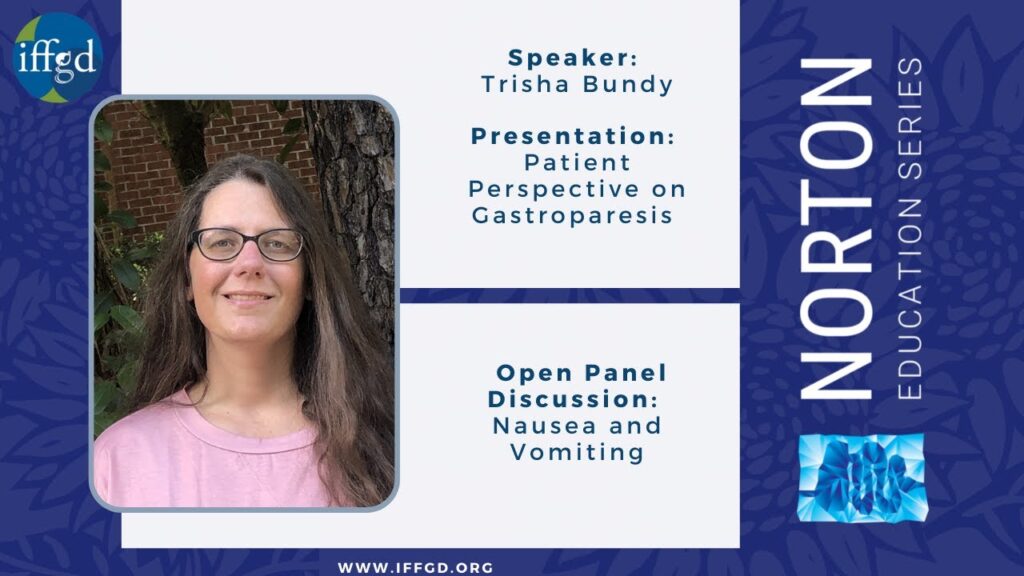
Patient Perspective on Gastroparesis – Presented by Trisha Bundy This video is a part of the 2021 Norton Education Series: 30th Anniversary Event which was broadcast on November 6 & 7, 2021. Included in Session 7: Nausea and Vomiting, this presentation provides the patient perspective on living with Gastroparesis by Trisha Bundy. Full event details, […]
Disorders of the Stomach: 2021 NES

Disorders of the Stomach – Presented by Dr. Jan Tack This video is a part of the 2021 Norton Education Series: 30th Anniversary Event which was broadcast on November 6 & 7, 2021. Warning: Some of the educational videos in this program contain graphic images of the human body related to medical procedures and for […]
Pharmacologic & Surgical Treatments for Stomach Disorders: 2021 NES
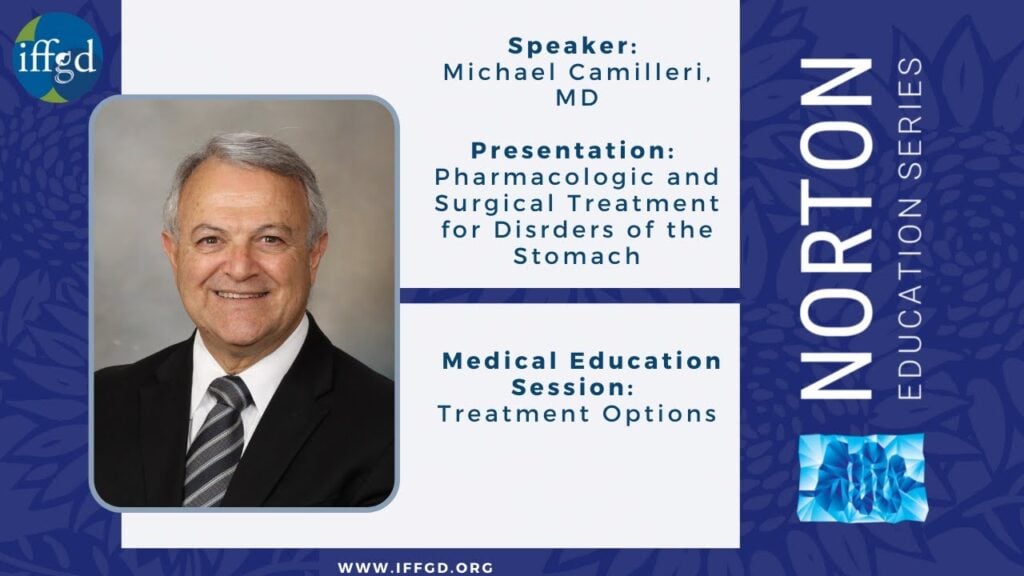
Treatments for Stomach Disorders – Presented by Dr. Michael Camilleri This video is a part of the 2021 Norton Education Series: 30th Anniversary Event which was broadcast on November 6 & 7, 2021. Warning: Some of the educational videos in this program contain graphic images of the human body related to medical procedures and for […]
565- Gastroparesis Overview
Gastroparesis (GP) is a condition of slowed stomach emptying with no intestinal blockage. Healthcare providers often refer to this as delayed gastric emptying. This is referred to as a motility disorder where the stomach does not empty food as quickly as it should.
Johanna Richter

411 How to Qualify for Social Security Benefits
Gastrointestinal (GI) disorders are more common than people think. Even though almost everyone has occasional bouts of GI issues, thousands of people have chronic and severe GI disorders that can make it impossible for them to work. If you have worked in the past but can’t work now because of a GI disorder that you expect to last a year or more, you can file a […]
Patient Illness Experience Interview with Jason Clay
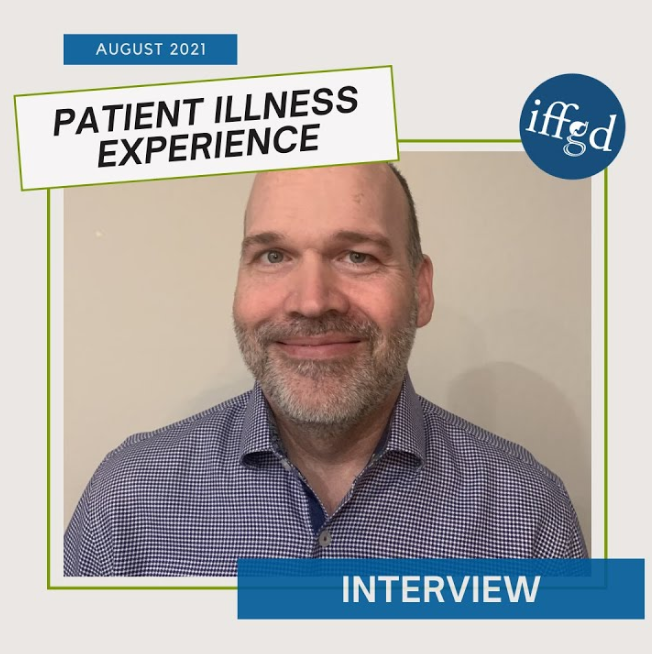
Today we will speak with Jason about his patient illness journey to help raise awareness about Gastroparesis. Gastroparesis is a GI disorder estimated to affect up to five million people in the United States. In a recent online study conducted by IFFGD in 2019, patients were asked about their current state of health on a […]
Dr. Richard McCallum – IFFGD Idiopathic Gastroparesis Grant Winners: Where Are They Now?
2014 Recipient of IFFGD Grant for Research of Idiopathic Gastroparesis Richard McCallum, MD This episode is hosted by IFFGD’s Hayley McCorkle and features our 2014 Grant Winner Dr. Richard McCallum. Dr. McCallum is the Chairman of Medicine at the Texas Tech Health Sciences Center. He is the director of GI research and the head of […]
Dr. Leo Cheng – IFFGD Idiopathic Gastroparesis Grant Winners: Where Are They Now?
2014 Recipient of IFFGD Grant for Research of Idiopathic Gastroparesis Leo Cheng, PhD This episode is hosted by IFFGD’s Hayley McCorkle and features our 2014 Grant Winner Dr. Leo Cheng. Dr. Cheng is a professor and bioengineer in Auckland, New Zealand. His research focuses on using bioengineering techniques to understand what happens in your gut […]
Cynthia’s Personal Story
Cynthia’s Personal Story: “My son Sam finally was diagnosed with gastroparesis” My son Sam was diagnosed with dilated cardiomyopathy in 2016, underwent LVAD placement in November of that year, then had a heart transplant in December. He was 16 years old at the time. Post transplant he vomited every day and was constantly nauseous, and […]
Vern’s Personal Story
Vern’s Personal Story: Managing Gastroparesis Through Diet I just want to tell people how I control it. The most success ive had keeping it away, and if we’re all talking about the same thing, wouldnt u give almost anything to not have this affliction? I take a Nexium and probiotic everyday in morning. I eat […]